Khademane Zahra
One system that brings families' needs to volunteers and partner organisations who can meet them, from the first report to a public account of the result, with the families' dignity as the line never crossed.
- Type
- Volunteer service network
- Disciplines
- Product design, design systems, development
- Surfaces
- Marketing site, volunteer panel, admin panel, API
- Languages
- Persian, English, Arabic
Most charities start from their own structure: working groups, offices, forms. The World Assembly of the Servants of Hazrat Zahra wanted to start from the other end, from a family with a need and from someone with something to give (a skill, time, a place, equipment or money), and to bring the two together. We built the system around that path: report, verify, match, fund, deliver, and report back in public.
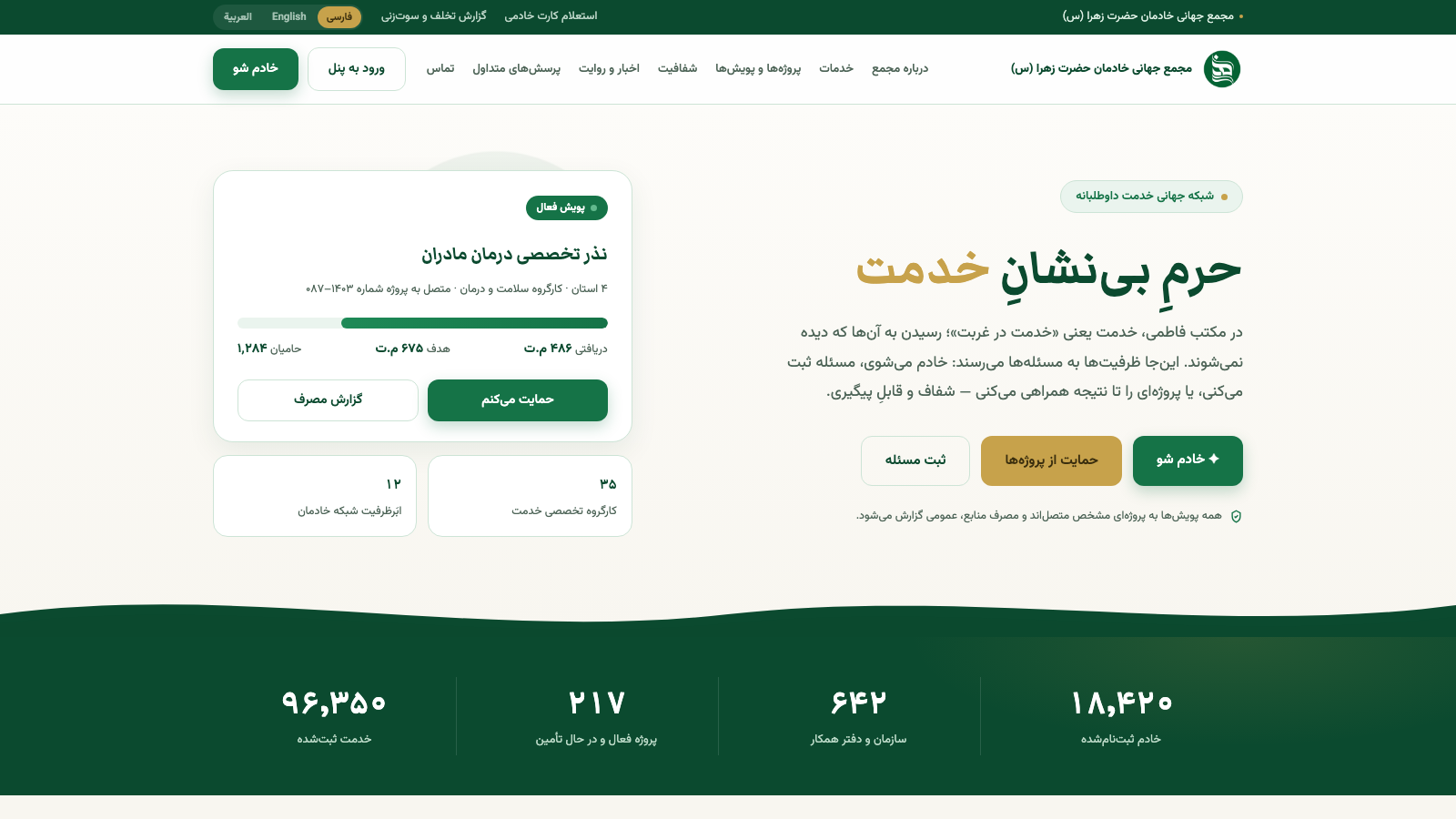
From the first report to the result.
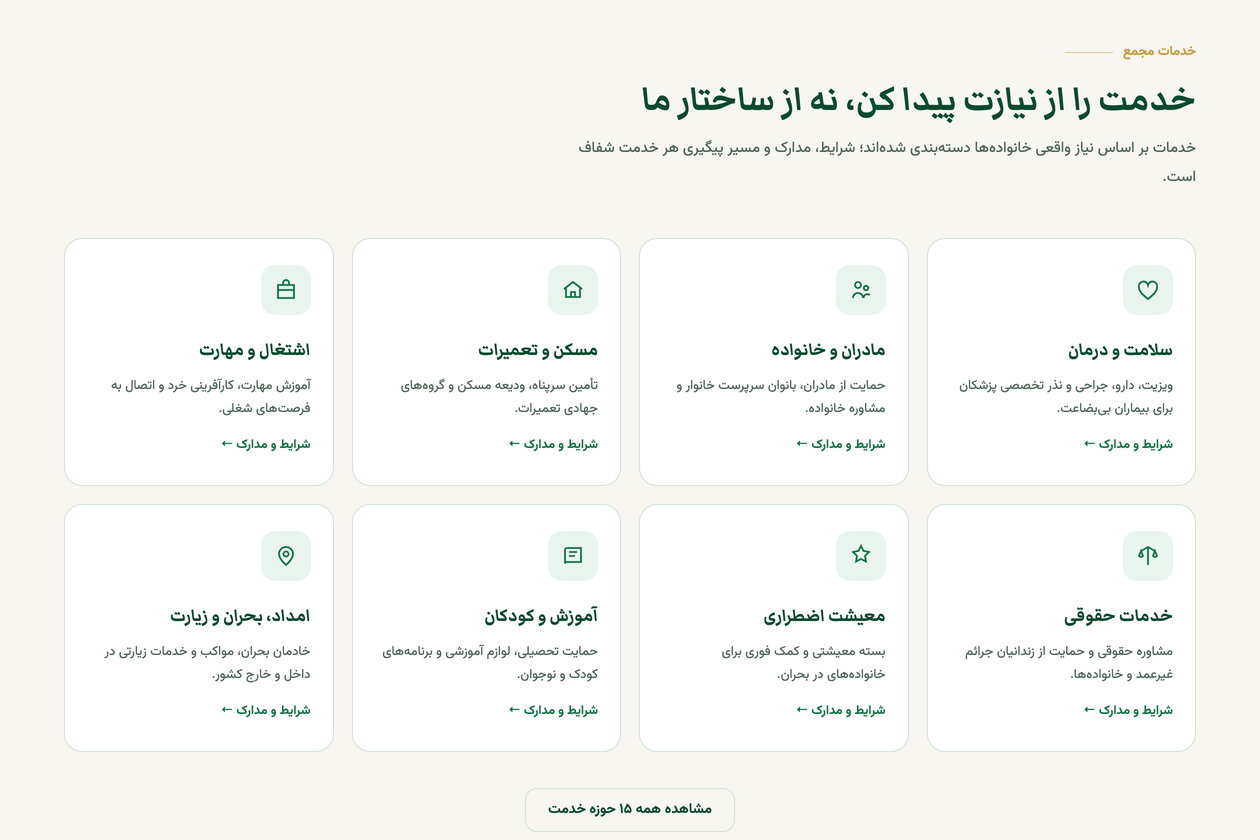
Services are grouped by real need rather than by the organisation's chart: health, mothers and families, housing, work, legal aid, emergency support, education and children, relief. Fifteen areas, each stating its conditions, documents and how it is followed up. In the site's own words: find the service from your need, not from our structure.
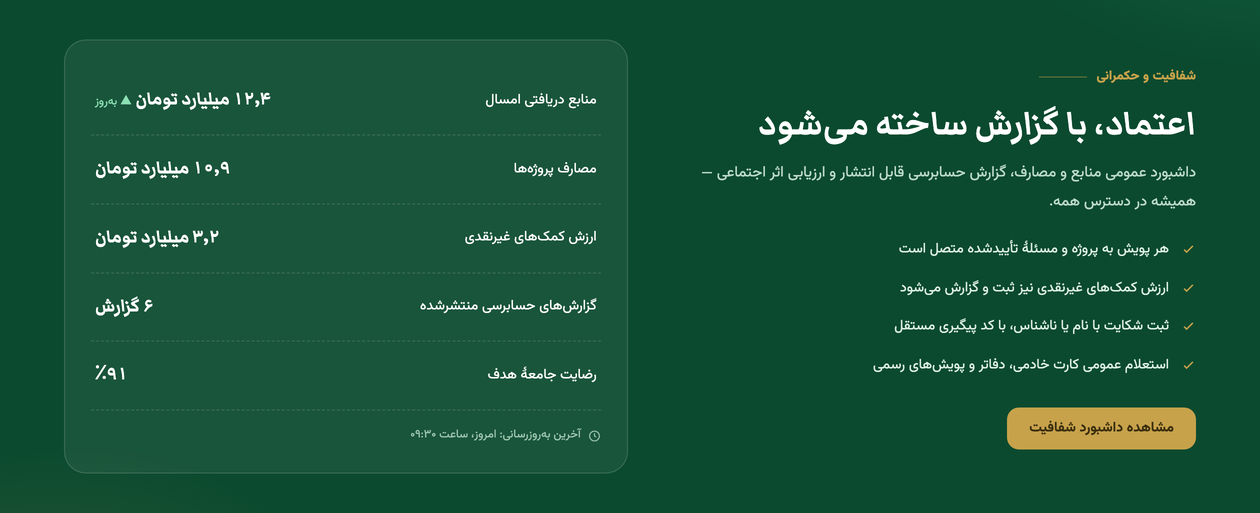
In this work trust is built with reports. Every campaign is tied to a verified project and need, and its target, takings, balance and spending report are public; in-kind gifts are valued and recorded too, and the transparency dashboard keeps income and spending open to everyone.
The families' dignity was the line the design never crosses. A need can be reported anonymously, every report gets a tracking code, a complaint, named or not, has its own path, and anyone can verify a volunteer card, an office or an official campaign.
Behind it we built a Django back end with a background job queue, a panel for volunteers, and an admin panel with one-time-code sign-in and separate roles and access levels for working groups and offices. The marketing site runs on Payload CMS, so the assembly's own team publishes news, stories and projects.
The site reads in Persian, English and Arabic, because the network reaches from neighbourhoods to partner centres outside Iran; and its visual language, deep green and gold, calm and unadorned, was meant to carry the quiet, unnamed service the assembly believes in.